Stop Picking at It: How to Actually Clean Your ChomChom Roller
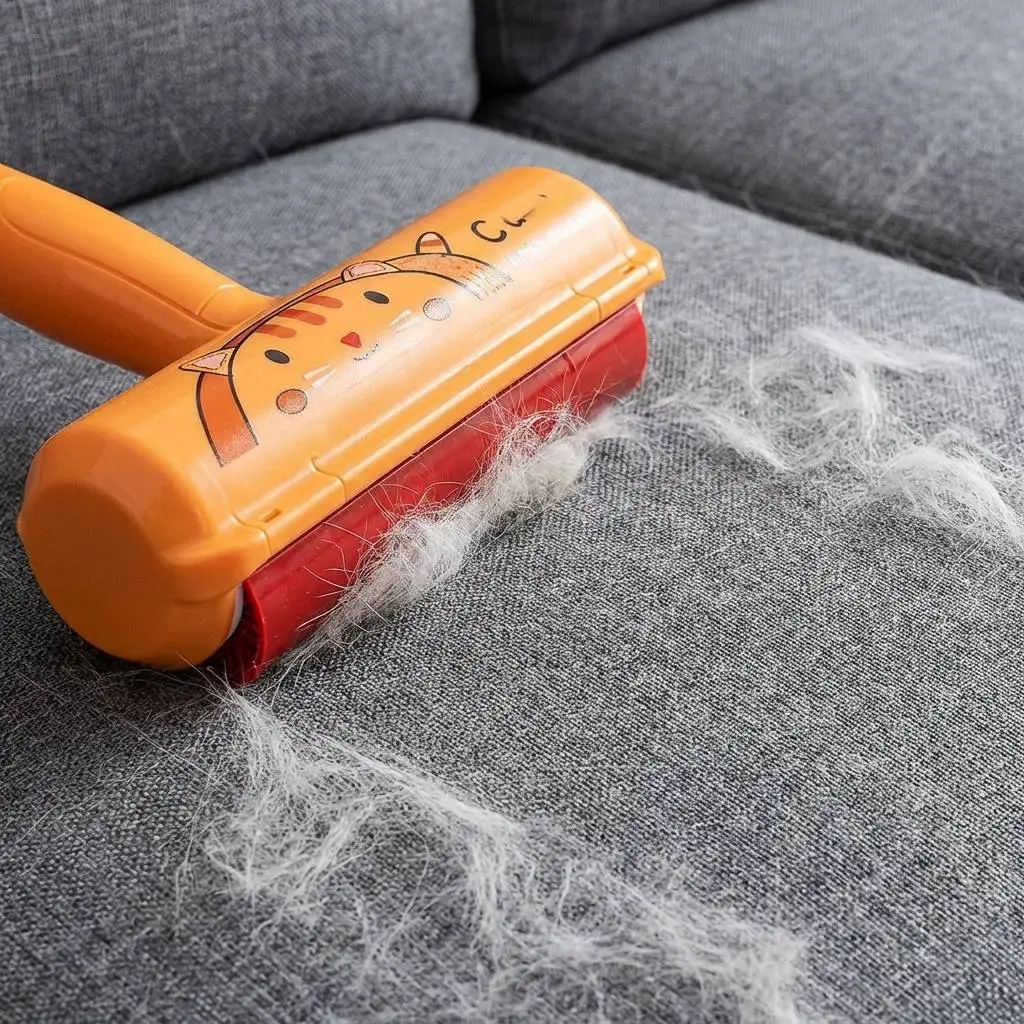
You just finished rolling your cat-hair-infested sofa. The roller worked. Great. Now you’re standing there, staring at the red velvet strips, picking hair out with your fingernails like a caveman. It’s gross, it’s annoying, and you’re probably doing it wrong.
I test garbage gadgets for a living. Most “self-cleaning” tools are a lie designed to sell you subscription refills. The first time I picked up a ChomChom, I almost threw it in the trash because I couldn’t figure out where the hair went. I thought it was just pushing dust around. Turns out, the design is solid, but the user experience is zero. The manual is useless. Let’s fix that so you can stop touching hairballs.
The Basics: Stop Trying to Peel the Fabric
If you are looking for the edge of the tape to peel off a dirty sheet, stop. You’re wasting your time. This isn’t a sticky roller. It’s a mechanical brush.
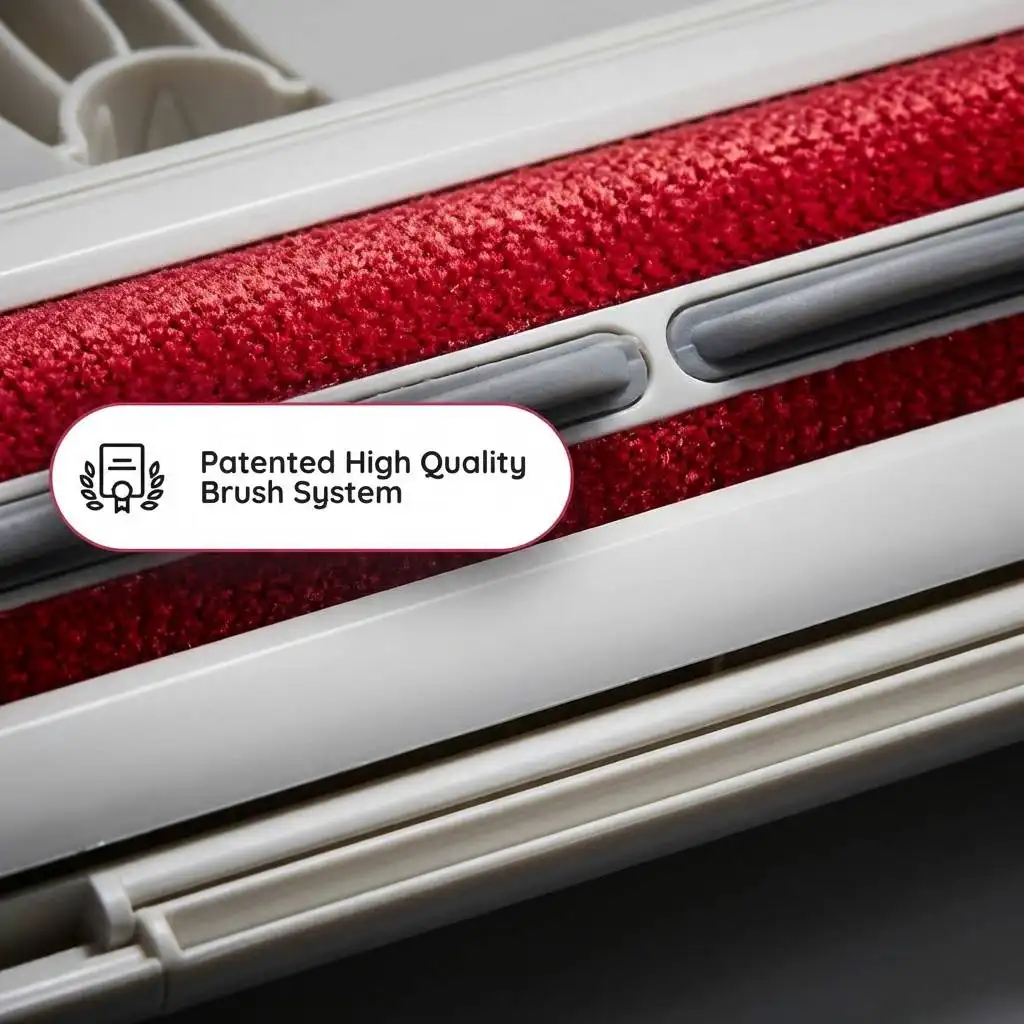
The mechanism relies on static and friction. Those two red velvet strips? They don’t come off. If you take tweezers to them, you’re going to rip the fabric and ruin the tool. If you’re using tweezers, you’ve already lost.
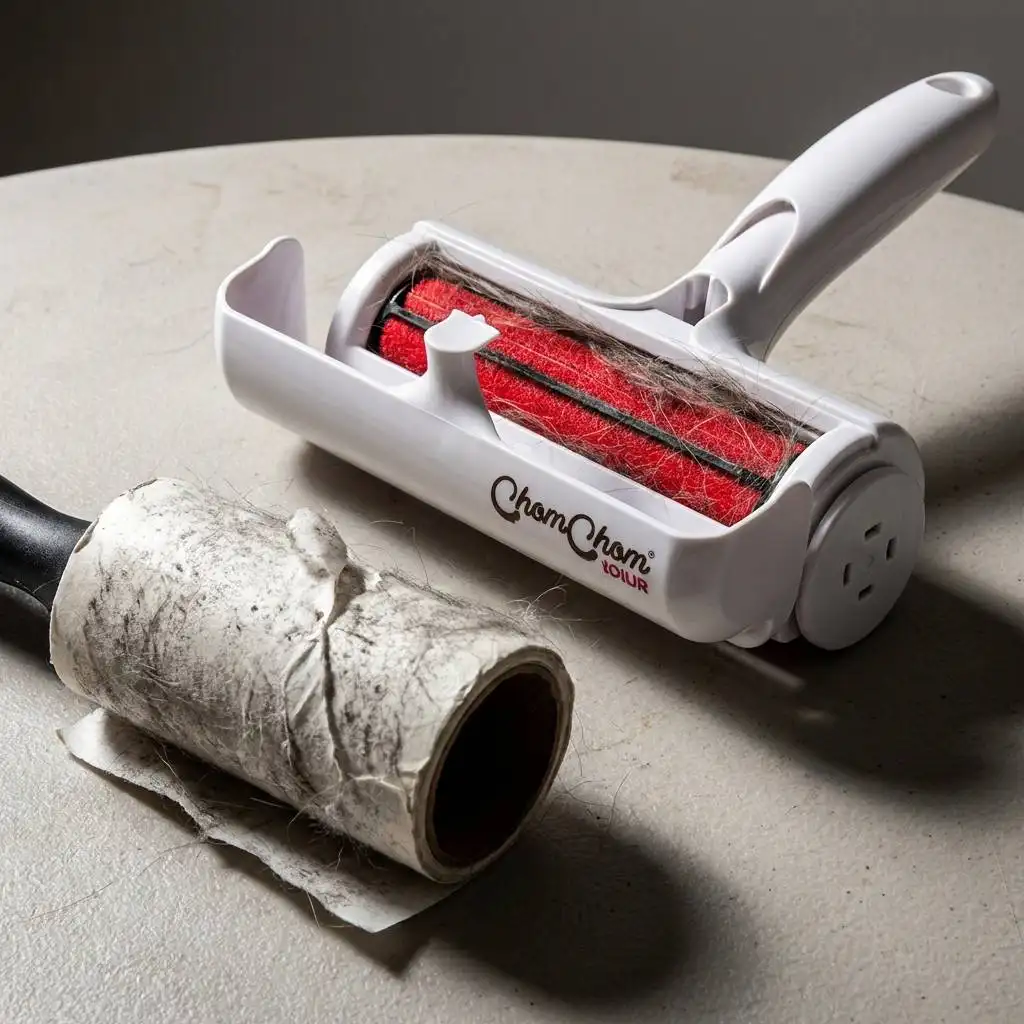
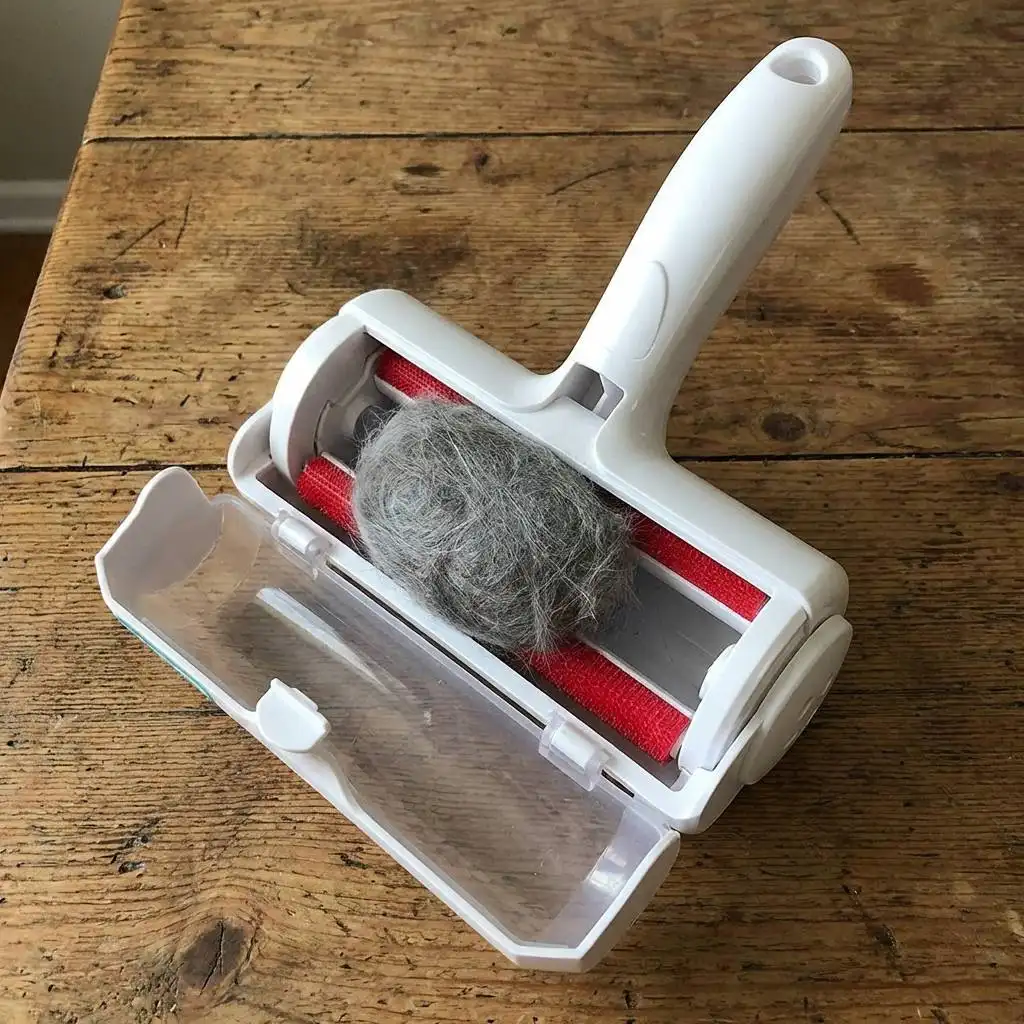
The device has an internal waste compartment—a “trap door” effectively. Most people don’t realize this exists until they drop the thing and it pops open, exploding grey fur all over their freshly cleaned rug. Your goal is to get the hair into that box, not pick it off the surface.
The Two-Second Daily Clean (The Motion)
Here is the part most people mess up. You don’t clean the ChomChom after you use it. You clean it while you use it.
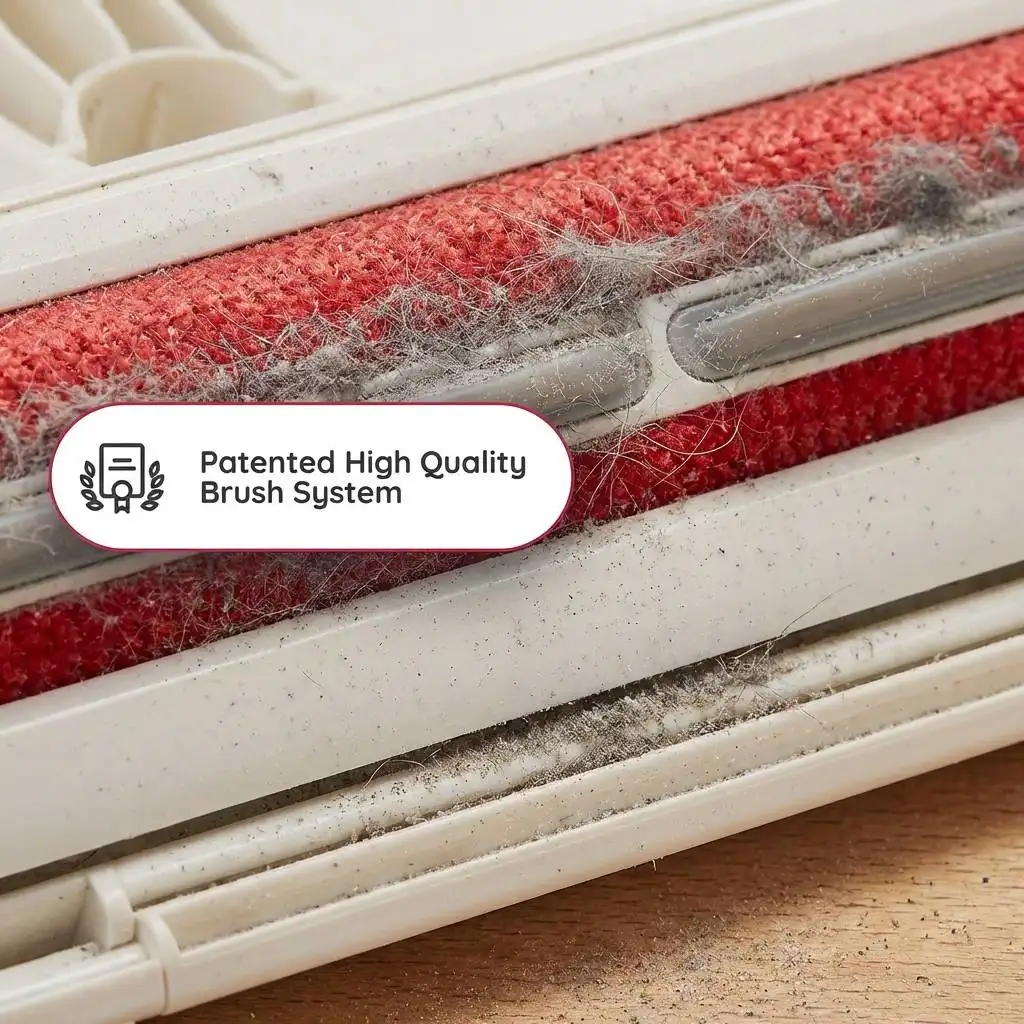
The cleaning mechanism is internal. Between the two red strips, there is a rubber squeegee and a brush system inside the head. When you push the roller forward, one strip catches hair. When you pull it back, the internal brushes scrape that hair off the strip and shove it into the back compartment.
If you don’t hear a “click-clack” sound, you aren’t doing it right.
The Protocol:
- Finish the Job: Once your couch is clean, find a clean spot on the upholstery (or use your pant leg).
- Vigorous Roll: Roll the device short and fast, back and forth, about 5 or 6 times. You need to hear the plastic snapping. This forces the last bits of hair into the chamber.
- The Dump: Locate the latch on the back of the handle. Press it. The lid pops open. Shake the hair ball into the trash.
Deep Cleaning: When the Roller Gets Grimy
Sometimes, the “self-cleaning” bit isn’t enough. If you have fine dust, dander, or weird drywall powder on your furniture, the red velvet gets coated in a grey film. This reduces friction. If the velvet is slick, it won’t grab hair.
Do not overthink this. You need to wipe it down.
The Wet Cloth Method:
- Get a microfiber cloth. Wet it, then wring it out until it is barely damp. If it’s dripping, it’s too wet.
- Wipe the red velvet strips against the grain. You want to lift the dust out of the fibers, not mash it deeper in.
- Wipe down the grey rubber squeegee blade in the middle. This part gets sticky and holds onto gunk.
- Let it air dry with the lid open.
What You Should Never Do (Don’t Be Stupid)
This tool is made of rigid ABS plastic and metal springs. It feels sturdy, but it has weaknesses. Users break these things by treating them like robust shop tools.
1. No Running Water
Do not run this under the sink. It is not waterproof. Water will get into the axle pins and rust the springs. Once the springs rust, the “click-clack” motion stops, and you have a paperweight.
2. No Chemicals
Don’t spray it with bleach, Lysol, or heavy solvents. The red fabric is glued onto the plastic. Harsh chemicals dissolve the adhesive. Eventually, the fabric strips will peel off, and the roller is trash.
3. The Dishwasher
There is always that one guy who thinks, “I’ll just toss it in the dishwasher.” Don’t be that guy. The heat will warp the plastic housing. If the housing warps even a millimeter, the internal scraper won’t make contact with the brush, and it stops working.
Troubleshooting: Why Is My Roller Still Dirty?
If you’ve followed the steps and the roller is still covered in hair, you have a mechanical issue or a user error.
Issue: The trap door won’t stay closed.
Fix: Check the latch. Usually, a piece of lint is jammed in the locking mechanism. Blow it out or use a toothpick to clear it.
Issue: It’s just pushing hair around.
Fix: You aren’t creating enough friction. You are likely rolling it only one way (like a sticky roller). You must go back and forth aggressively. Without the backward motion, the internal brush never engages to clean the velvet.
FAQ: Quick Answers for Short Attention Spans
Can I wash the ChomChom roller with water?
No. Do not submerge it. Use a damp cloth only. Water ruins the internal springs.
How long does the ChomChom roller last?
If you don’t drop it or soak it, it lasts for years. It is strictly mechanical. There are no batteries to die and no sticky sheets to run out of.
Why does my ChomChom smell?
You probably picked up wet pet hair or food particles. That organic matter is rotting inside the fabric. Wipe it with rubbing alcohol and let it air out in the sun. Next time, dry the mess before you roll it.
The Verdict: Is the Maintenance Worth It?
Honestly, if you have to read a manual to operate a lint roller, the product design failed somewhere. But since you already bought it, at least use it right.
The Ugly Truth: It is easier to maintain than a vacuum cleaner (no filters to wash), but more annoying than a sticky roller (where you just tear a sheet and move on). The trade-off is money. You save cash on refills, but you pay for it by having to touch a warm block of compressed pet hair every few days.
Rating: Solid functionality, annoying learning curve. Keep it dry, and it won’t die.